Which parts of a handyman job change when the customer supplies their own materials?
Customer-supplied materials can be a favor or a trap. Here is what shifts in your quote, your schedule, and your warranty, and how to set terms that keep the job clean.
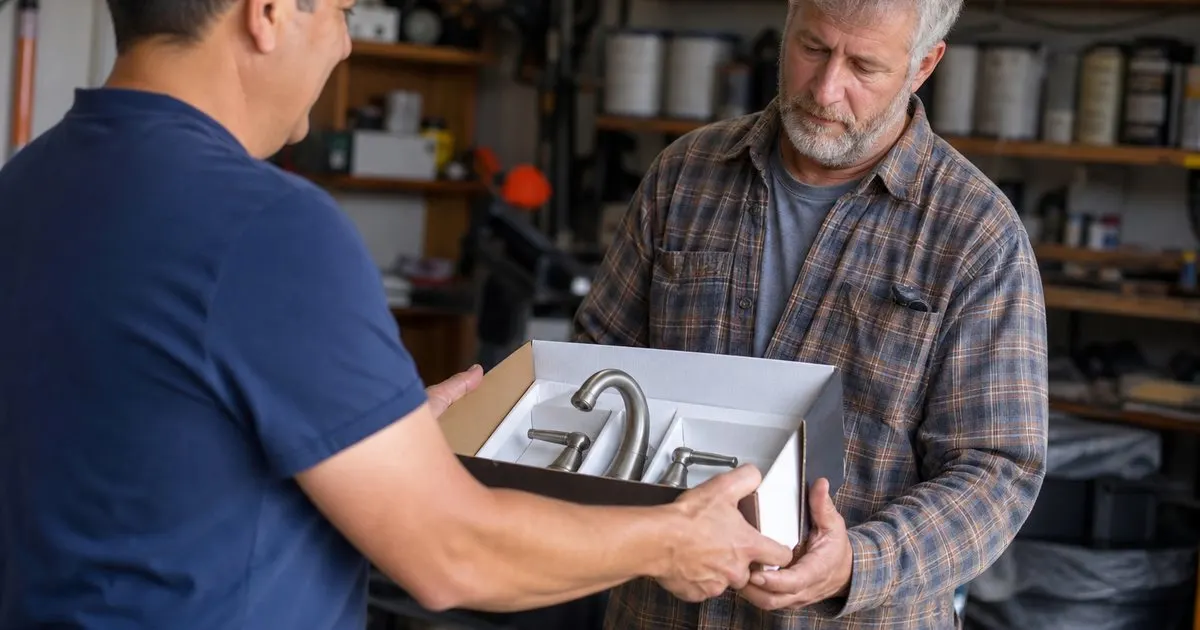
What changes in the price
You lose the material markup, and that markup is not padding. It covers the time to source the part, the trip to get it, the return if it is wrong, and the risk that it fails. When the customer supplies the material, some of that time goes away and some of it does not. You still have to inspect the part, confirm it fits, and sometimes discover on the job that it does not. Price labor-only jobs with a small allowance for verification and be explicit that a return trip caused by a wrong or missing part is billable. Related: How do you schedule a full day of handyman jobs without wasting drive time?
Labor-only quotes should also be firmer about what "install" includes. Installing a customer's ceiling fan means mounting and wiring the fan they hand you; it does not mean discovering the box is not fan-rated and replacing it for free. Write the assumptions on the quote: the existing box is fan-rated, the existing shutoffs work, the supplied unit matches the rough-in. When an assumption fails, you have a clean line for the additional work. Related: What is the best way to write a handyman quote that wins the job?
Keep reading: How do you schedule a full day of handyman jobs without wasting drive time?, What is the best way to write a handyman quote that wins the job?, Why do so many handyman estimates never turn into booked paying work?. See how HandyPlanr helps you handyman job scheduling and quote tracking.
What changes in the schedule
The biggest scheduling risk is arriving to find the material is not there, is the wrong size, or is missing a part. When you supply materials you control this; when the customer does, you do not. Ask them to send a photo of the actual product and the model label before the job, and to confirm it has physically arrived. For anything with dimensions (doors, vanities, windows, appliances), ask for the measurements on the box and compare them to what you measured.
Build the possibility of a stall into the day. Put customer-supplied jobs where a delay hurts least, usually not as the first stop with a full day stacked behind it. Have a fallback task ready: if the vanity has not arrived, you can still do the two other items on their list. And say in advance what happens if you arrive and cannot proceed: a minimum charge for the visit applies and you reschedule. Customers who know this tend to double-check their delivery. Related: Which jobs should a solo handyman book first on a packed schedule?
What changes in the warranty
Your warranty on customer-supplied materials should cover workmanship only. If the faucet they bought online starts leaking at the cartridge three weeks later, that is a product failure and the return trip is billable. Say this in writing, kindly and clearly, before the job: "I warranty my installation work. For parts you supply, the manufacturer's warranty applies, and a return visit for a part failure is charged at my normal rate." Most customers accept this without a second thought; the ones who object were planning to hold you responsible.
Inspect the part before you install it and note anything that looks off: a bent flange, missing hardware, a valve that feels flimsy. Point it out to the customer and let them decide whether to proceed. If they proceed, note it on the job record. This protects you and, more often than people expect, prompts the customer to go back to the store for a better unit, which makes your job easier too.
When to say yes, and when to steer them to your supply
Say yes readily for standard, well-specified items where the customer has a preference: a particular faucet finish, a fan they like, a specific light fixture. Their choice, their budget, your labor. Steer them toward your supply for anything where compatibility matters and they are unlikely to know the details: toilet rough-in dimensions, replacement windows, anything electrical with specific ratings, exterior doors. Frame it as protecting their time and money, because that is exactly what it does.
For jobs where you would rather supply, offer to source at cost plus a stated handling amount so the customer sees they are not being gouged. Many people who want to buy their own materials are simply reacting to a bad experience with markup somewhere else. In HandyPlanr a quote can carry both customer-supplied and handyman-supplied lines so the split is visible, but the important part is that the split is written somewhere the customer sees it before they accept. Related: Why do so many handyman estimates never turn into booked paying work?
- Labor-only quotes need written assumptions about existing conditions and a billable return trip if the supplied part is wrong.
- Ask for a photo of the actual product and confirm it has arrived before the job, and schedule it where a stall hurts least.
- Warranty your workmanship only; part failures on customer-supplied items are a billable return visit.
- Say yes to preference-driven standard items and steer compatibility-sensitive items toward your own supply.

Julien Jimenez
Julien Jimenez is an independent software builder based in Paris. He designs, ships, and operates focused SaaS products for small businesses and independent professionals. Read the full author page.
Book The Day, Close The Quote
Handyman job scheduling and quote tracking. HandyPlanr is built to help you put this into practice.
Start free trialMore from the HandyPlanr blog



Get the HandyPlanr playbook
Practical guides on handyman software, straight to your inbox as we publish them. No spam, unsubscribe any time.