When should a handyman quote from photos instead of visiting the site?
Photo quotes save you hours of unpaid driving, but they also hide the surprises that wreck a price. Here is how to decide job by job, and how to protect yourself when you quote remotely.
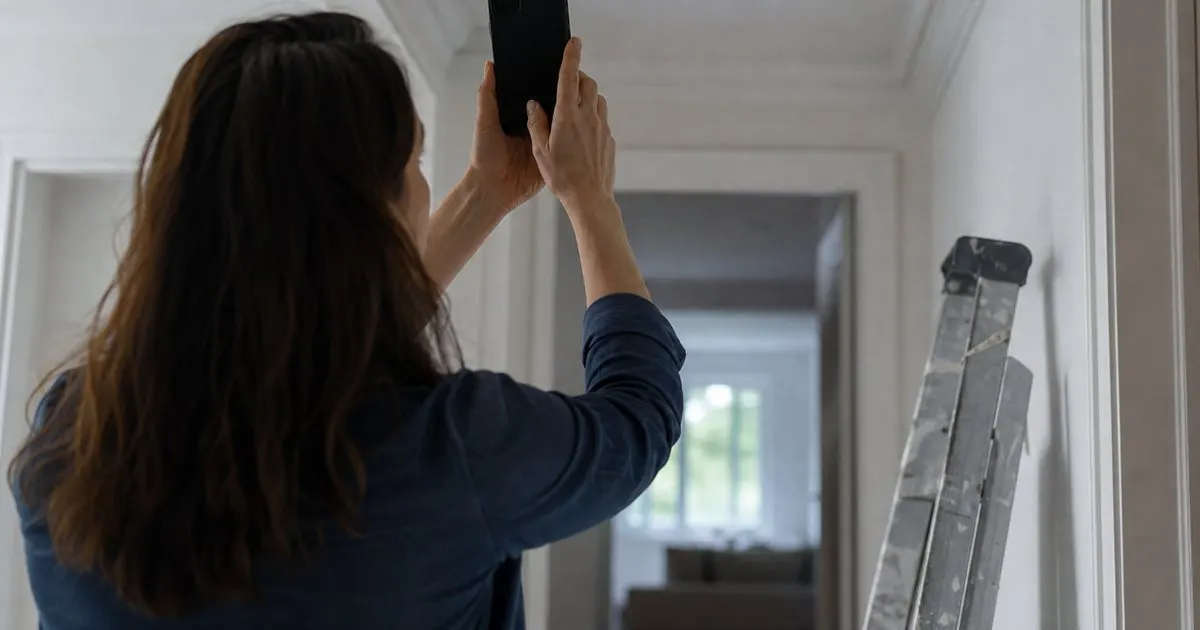
What a photo can and cannot tell you
Photos are excellent at answering "what is it" and poor at answering "what is behind it." A picture of a sagging closet door tells you the door style, the hinge type, and roughly the size, which is enough to price a rehang. A picture of a water stain on a ceiling tells you there is a stain. It does not tell you whether the source is a slow drip you will find in ten minutes or a roof problem that is not your job at all. Quote from photos when the visible surface is the whole story.
Photos also miss access and logistics. The photo of the light fixture does not show that it hangs over a stairwell, that the ceiling is fourteen feet up, or that the customer's driveway cannot fit your truck. Ask directly for those details: ceiling height, what is below the work area, where you can park, whether there are pets, and whether anyone will be home. A short list of questions sent with the photo request catches most of what the camera misses. Related: How do you quote a long customer punch list without underpricing it?
Keep reading: How do you schedule a full day of handyman jobs without wasting drive time?, What is the best way to write a handyman quote that wins the job?, Why do so many handyman estimates never turn into booked paying work?. See how HandyPlanr helps you handyman job scheduling and quote tracking.
Jobs that are safe to quote remotely
Anything where the work is on the surface and the parts are standard: hanging shelves, mirrors, or TVs on drywall; replacing a faucet, a light fixture, or a ceiling fan with a similar unit; swapping a lockset; assembling furniture; installing a screen door on an existing frame; patching a single drywall hole you can see fully. For these, a couple of clear photos plus a measurement from the customer usually give you everything you need. The risk of a surprise is low and the cost of a surprise is small.
Repeat customers in houses you already know are also good candidates, even for slightly larger work. You have seen the electrical panel, you know the plumbing is copper, and you know which walls are plaster. Your knowledge of the house substitutes for the visit. Keep notes on each property after every job for exactly this reason, because those notes are what let you quote the second and third jobs from your phone with confidence. Related: Why do so many handyman estimates never turn into booked paying work?
Jobs that need your eyes on site
Anything involving water damage, rot, mold, old wiring, structural questions, or a repair someone else has already attempted. These are the jobs where what you see is a symptom and the price depends on the cause. Bathroom work beyond a simple fixture swap almost always earns a visit, as does anything involving tile, exterior wood, or a deck. Multi-room punch lists benefit from a visit too, not because each item is complex but because walking the house together surfaces the items the customer forgot to mention.
Large jobs deserve a visit for a second reason: trust. A customer spending real money wants to meet the person doing the work before they commit, and the visit is where you win the job as much as where you measure it. If a customer resists a site visit for a large project, that tells you something about how the job will go. Offer a brief, scheduled visit and build it into the job rather than treating it as a favor.
Protecting a photo quote from surprises
Every remote quote should say what it is based on. One sentence does it: "This price is based on the photos and measurements you provided; if conditions differ when I arrive, I will confirm any change with you before proceeding." That line does not scare customers off. It reassures them that you will not spring a bigger bill without asking, and it gives you a clean way to re-quote on site if the closet door turns out to be a pocket door. Related: What details should every handyman job quote include to avoid later disputes?
Build in a small allowance for the unknown on jobs where you are guessing at one variable, and say what the allowance covers. Then, on arrival, do a quick walk-through before you unload. Confirm the quote matches what you see, get a nod, and start. When something does differ, price the difference on the spot and get agreement before touching it. HandyPlanr keeps the photos attached to the quote so you can compare on site, but a photo saved to your phone with the quote number in the caption works fine. Related: Why does a handyman need a minimum service charge for small jobs?
- Quote from photos when the visible surface is the whole job and the parts are standard.
- Send a short question list with the photo request to capture ceiling height, access, parking, and pets.
- Visit in person for water damage, old wiring, tile, exterior wood, prior failed repairs, and any large project where trust matters.
- State on every remote quote that the price assumes the photos are accurate and confirm on site before starting.

Julien Jimenez
Julien Jimenez is an independent software builder based in Paris. He designs, ships, and operates focused SaaS products for small businesses and independent professionals. Read the full author page.
Book The Day, Close The Quote
Handyman job scheduling and quote tracking. HandyPlanr is built to help you put this into practice.
Start free trialMore from the HandyPlanr blog
Get the HandyPlanr playbook
Practical guides on handyman software, straight to your inbox as we publish them. No spam, unsubscribe any time.